


 Kinetic IT
Artificial intelligence (AI) strategy is entering a new phase. For government, defence, and critical infrastructure organisations, the question is no longer only how quickly AI can be adopted. It is whether the capability built around AI can continue operating when the intelligence underneath it changes.
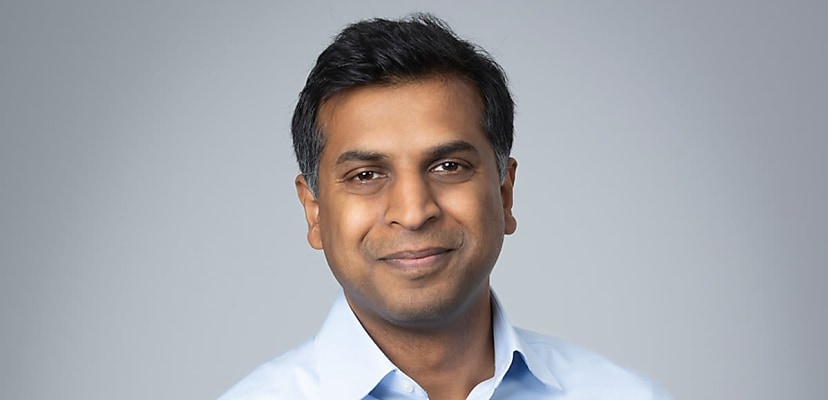
Kishore Jayaram, chief transformation officer at Kinetic IT, said, “Intelligence continuity is the ability to preserve and evolve important organisational capability as AI models, providers, and operating conditions change. While the AI model matters, it’s just one component inside a much larger architecture. Organisations need to be able to preserve the outcome when the intelligence underneath it changes, without disrupting the critical services and capabilities that depend on it.”
That shifts the AI strategy conversation away from simply securing access to the most capable model. Frontier intelligence is increasingly accessible across providers and platforms. If competitors can buy substantially the same intelligence, access to the model itself is unlikely to create enduring differentiation.
Instead, capability sits in what surrounds the model: organisational knowledge; customer and operational context; workflows; integrations; business rules; permissions; identity; controls; evaluation sets; decision history; human approvals; and fallback behaviours. As these elements mature, organisations begin encoding their data and their accumulated judgement about how work should be done.
Jayaram said, “It’s a simple principle: borrow the intelligence, own the capability. Traditional concerns about vendor, contractual, jurisdictional, data, and model dependencies remain relevant. However, the harder dependency may emerge in the surrounding environment, where institutional knowledge and operating decisions become embedded in agents, workflows, tools, and controls. Intelligence continuity addresses the distinction between being able to switch to another model and being able to quickly restore the same operational capability.”
Most organisations will consume rather than build frontier models. What they can control is the environment around those models: the so-called ‘harness’ that defines what an AI agent can access, which tools it can use, what decisions it can make, where it must stop, and how its actions are recorded and reviewed.
This harness can become a strategic asset because it contains accumulated organisational judgement. A deeply integrated single-provider environment may offer speed and capability. Preserving optionality may reduce concentration risk, but it carries cost and complexity.
Jayaram said, “There is no universal answer. The appropriate balance will differ between a commercial organisation and an agency responsible for public services, national security, or critical infrastructure. The important point is that the trade-off is deliberate rather than accidental.”

The continuity discipline also extends to AI agents. As agents gain access to data, tools, systems, and delegated authority, they increasingly behave like participants in a workflow rather than passive software.
That means organisations need to define identity, purpose, permissions, human sponsorship, delegated authority, performance expectations, monitoring, accountability, and decommissioning. Greater context, access, tools, and authority can make an agent more useful; however, those same factors can increase the consequence of failure.
Jayaram said, “We can delegate actions to AI; however, we cannot delegate accountability. As agents take on more work, organisations need to engineer both the limits of what they can do and the points where meaningful human judgement is required.”
There are four practical actions that technology and operational leaders can take.
1. Apply the 24-hour test. Ask what happens if a significant AI-enabled capability disappears for 24 hours. Criticality is not determined by how sophisticated the AI is, but by the consequence of its absence.
2. Build a capability bill of materials. Map what must remain true for each critical AI-enabled outcome to exist. Identify the models, platforms, data, tools, integrations, permissions, workflows, controls, and other dependencies that could not be substituted within an acceptable period. Those dependencies reveal the organisation’s practical lock-in.
3. Draw the ownership line. Decide which parts of the capability need to remain under organisational control so the outcome can be reconstructed elsewhere. This may include institutional knowledge, business rules, workflow definitions, evaluation sets, context, controls, decision history, and evidence needed to explain an outcome. Organisations do not need to own every ingredient; however, they need to retain enough of the recipe.
4. Set an intelligence recovery objective. Apply recovery thinking to AI. If a model or provider becomes unavailable, determine how quickly an acceptable substitute is required. Important capabilities may need a degraded or manual mode. Genuinely critical capabilities should have alternatives that are exercised: change the model, restore the workflow, reapply permissions, run the evaluations, and identify what breaks.
Jayaram said, “Agentic AI changes more than the technology stack, and as AI moves from assistance to execution, it can change the boundary between people and technology. These four actions turn intelligence continuity into an operating discipline for organisations to understand the consequence, know the dependency, retain the recipe, and invest in the resilience the consequence warrants.”
That discipline is particularly important for government, defence, and critical infrastructure organisations. These environments carry obligations that extend beyond productivity, including continuity of essential services, accountability, security, and the preservation of institutional capability.
Jayaram said, “Organisations don’t need to predict which AI model or provider will dominate in two years; however, they do need to understand which decisions made today will be difficult to undo tomorrow. The organisations that get material value from AI will be those that turn borrowed intelligence into enduring organisational capability.”
 Want to see more stories from trusted news sources?
Make Cyber Daily a preferred news source on Google.