


 Robert Dougherty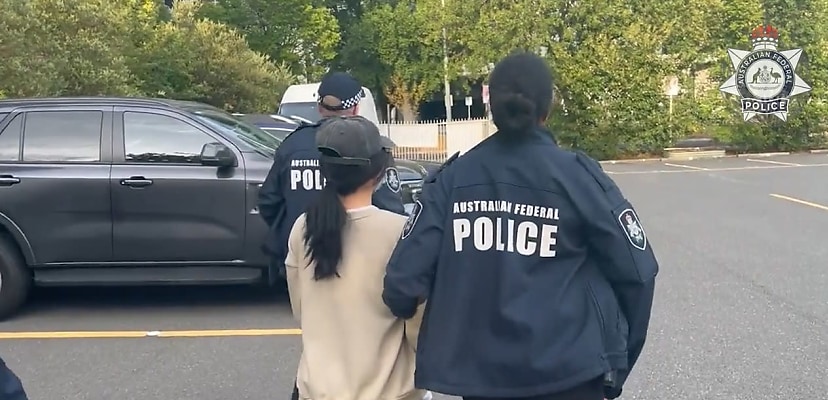
A 25-year-old man and a 31-year-old woman are expected to face the ACT Magistrates Court on 11 February, after being charged by the Counter Foreign Interference Taskforce (CFITF) with one count of reckless foreign interference, contrary to section 92.3(1) of the Criminal Code (Cth).
The offence carries a maximum penalty of 15 years’ imprisonment.
The AFP will allege the pair worked with another woman charged in August 2025, under the direction of a Public Security Bureau in China, to covertly gather information about the Canberra branch of Guan Yin Citta, a Buddhist association.
“The AFP, as part of the CFITF, began Operation Autumn-Shield in March 2025, after receiving information from ASIO,” said the AFP.
“The investigation led to a number of search warrants in the ACT in July 2025, and the arrest of a female Chinese national in August 2025.
“Further investigations resulted in the AFP arresting the man and woman earlier today (11 February 2026).”
The pair are the fourth and fifth individuals charged with foreign interference offences since new laws were introduced by the Commonwealth in 2018.
In investigations separate to Operation Autumn-Shield, a Victorian man was charged in November 2020, and an NSW man was charged in April 2023.

AFP Counter Terrorism and Special Investigations Assistant Commissioner Stephen Nutt said foreign interference is a serious crime that undermines democracy and social cohesion.
“Australia is not immune to foreign interference, and we should not expect this arrest will prevent further attempts to target our diaspora communities,” Assistant Commissioner Nutt said.
“This is why the role of the Counter Foreign Interference Task Force is so important in investigating individuals and disrupting activities that undermine our democracy and social cohesion.
“It is important to note, one of the best defences to foreign interference is increased community awareness of the threat and the reporting of suspicious activity to authorities.
“Members of our culturally and linguistically diverse communities are more likely to be victims of foreign interference or transnational repression than to be offenders.”
Anyone with information on individuals or groups suspected of committing foreign interference should contact the National Security Hotline on 1800 123 400.
Australian Security Intelligence Organisation (ASIO) director-general Mike Burgess said foreign interference remains one of Australia’s principal security concerns.
“A complex, challenging and changing security environment is becoming more dynamic, diverse and degraded,” Burgess said.
“Multiple foreign regimes are monitoring, harassing and intimidating members of our diaspora communities. This sort of behaviour is utterly unacceptable and cannot be tolerated.”
Members of the public who feel threatened should contact their local police on 131 444, or in an emergency or life-threatening situation, call Triple Zero (000) immediately.
Individuals or community groups who feel they are the target of foreign interference are encouraged to contact the National Security Hotline on 1800 123 400.
 Want to see more stories from trusted news sources?
Make Cyber Daily a preferred news source on Google.